Justice Mission 2025: China's Incursion On Taiwanese Sovereignty
Justice Mission 2025: China's Incursion On Taiwanese Sovereignty
Justice Mission 2025: China's Incursion On Taiwanese Sovereignty
China’s Justice Mission 2025 encircled Taiwan with 200 air sorties, 40–50 ships and 27 missiles in 2 days, triggering regional alarm and sharp security warnings.
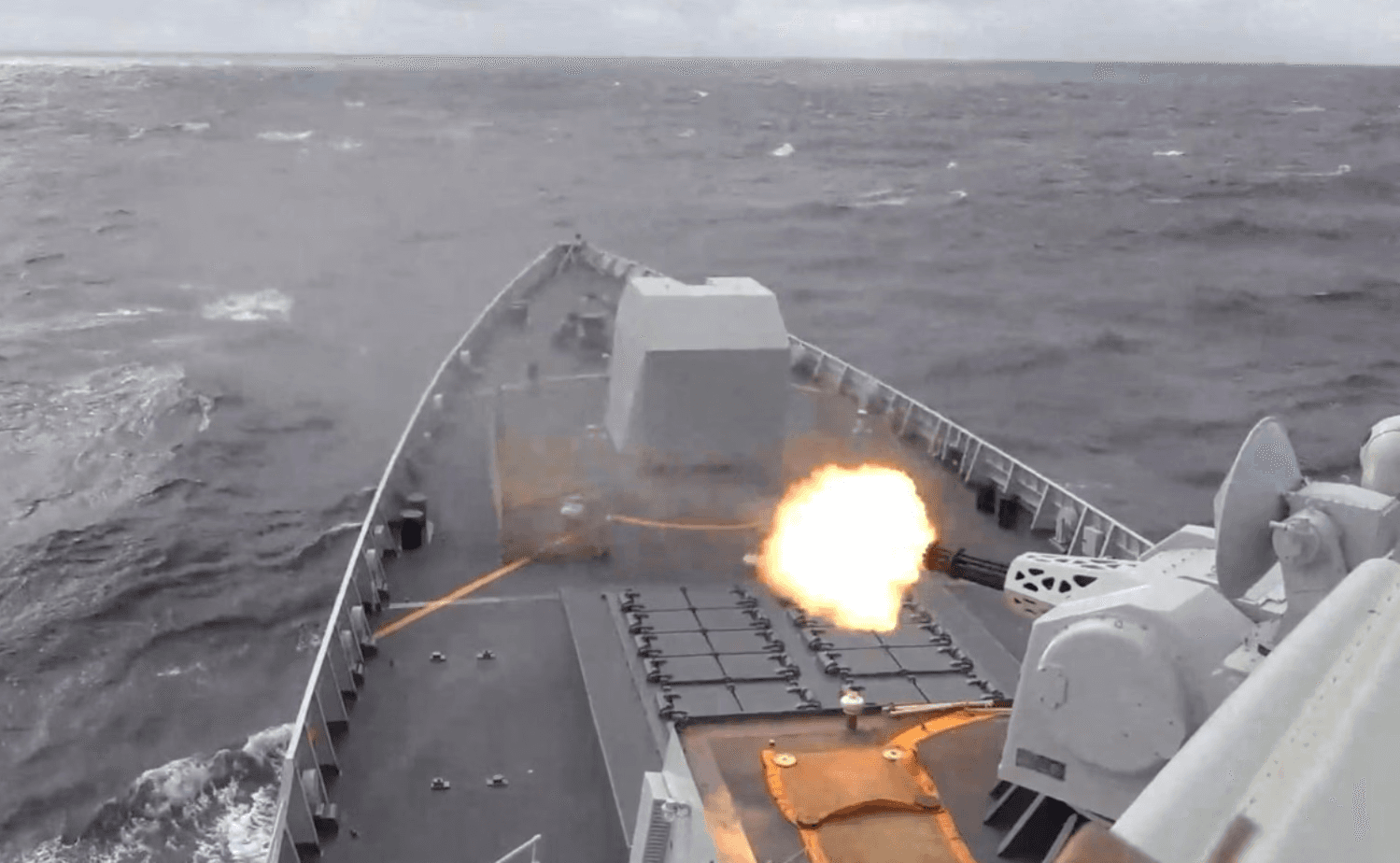
December 29, 2025—just 11 days after the United States approved an $11.1 billion arms sale to Taiwan—the People’s Republic of China (PRC) launched a large military exercise off the coast of its eastern theatre. Justice Mission 2025, as it was titled, saw the PRC employ a coordinated triad of air, naval, and missile drills—exhibiting a (estimated) totality of 200 military aircraft sorties, 40-50 naval coastguard vessels, and 27 missiles deployed around Taiwan in just 2 days.
December 29:
According to John Dotson, Director of the Global Taiwan Institute, the first day of drills saw the heaviest tactical air activity, as:
Taiwan’s Ministry of National Defence (MND) reported 130 PRC aircraft sorties (individual flight missions), with 90 Warplanes crossing into Taiwan’s Air Defence identification Zone (ADIZ).
Taiwan’s ADIZ recorded incursions from the north, southwest, southeast, and east of Taiwan’s mainland, demonstrating China’s ability to enclose Taiwan by controlling its aerial frontier.
China’s naval presence was also substantial, exhibiting:
A deployment of 14 Navy Warships, 11 of which entered Taiwan’s bordering zone (whilst unspecified, “bordering zone” can refer to Taiwan’s Contiguous zone—a maritime buffer just beyond Taiwan’s sovereign territory).
Another 14 Coast Guard ships conducted operations around Taiwan, 8 of which entering the speculated Contiguous (bordering) zone.
A further 4 amphibious assault ships were spotted approximately 85 kilometres east/southeast of Taiwan.
Taiwan’s MND had recorded this activity between 6am on Monday and 6am on Tuesday.
December 30:
The military exercises commencing on the second day developed in 3 phases, as Chinese forces carried out live-fire exercises in the designated maritime zones encircling Taiwan from 08:00 to 18:00.
The first of the three phases, starting at 08:00, initiated with live fire drills conducted by air and naval assets in sea areas to both the north and south of Taiwan.
The second phase commenced at 09:00, consisting of 27 long-range rocket firings from the Fujian Province: 17 of which impacting the north exercise zone and 10 impacting the west/southwest exercise zones.
The third phase started at 15:00, consisting of tactical air activity and continued naval drills.
Taiwan’s MND reported a total of 71 sorties, 35 of which crossed the Taiwan Strait centreline.
A total of 13 Naval ships and 15 Coast Guard vessels conducted operations in the vicinity of Taiwan. 11 Naval ships and 8 Coast Guard vessels entered the speculated Contiguous (bordering) zone.
The 4 aforementioned amphibious ships continued operations to the east/southeast of Taiwan.
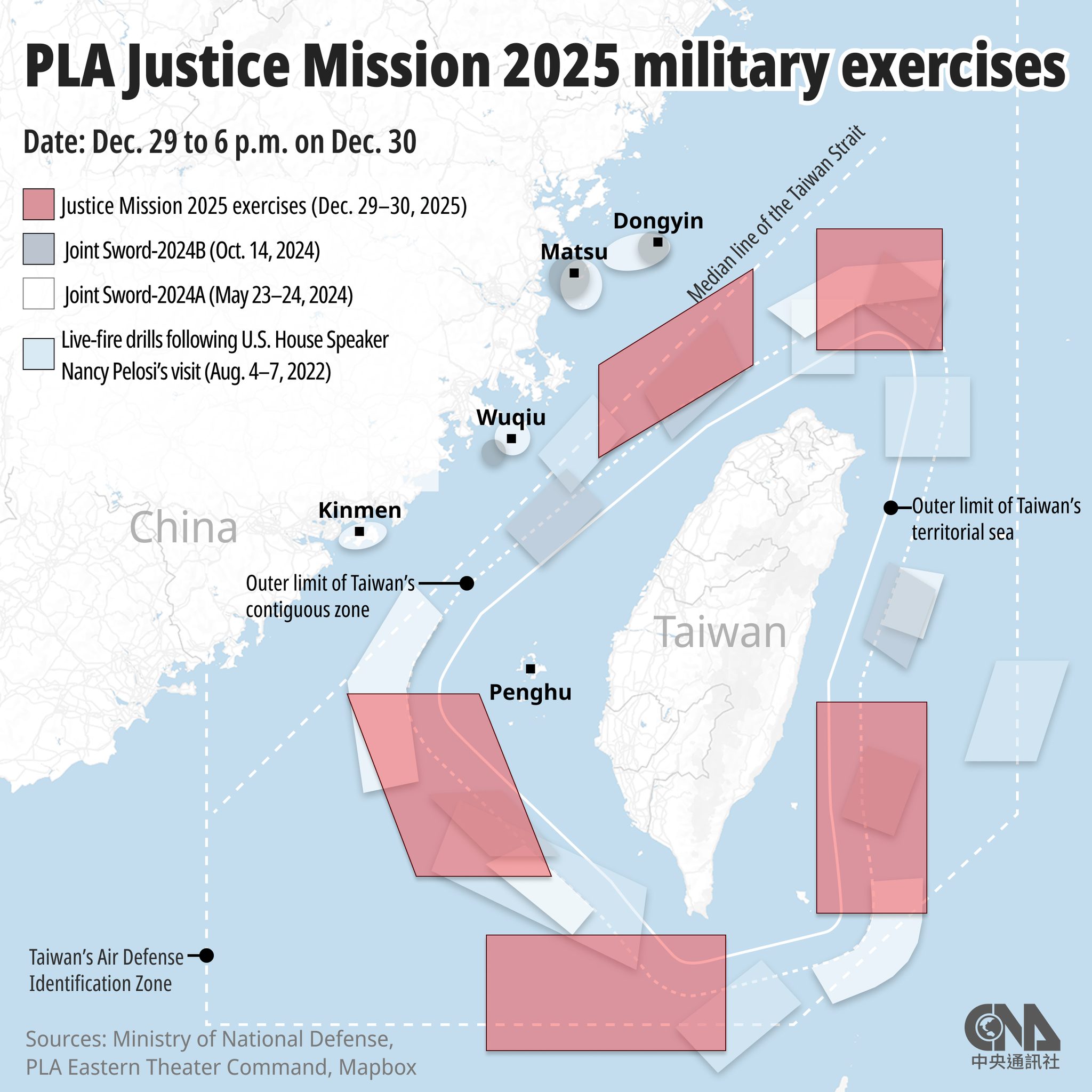
Taipei condemned the exercises as provocative and a threat to regional stability as its MND stated that the missiles came closer to Taiwan’s main island than previous fire-drills did. Officials iterated the importance of defending Taiwan’s democracy and preparing for any future security challenges.
Regional actors shared such sentiments. Japanese Foreign Ministry press Secretary Kitamura Toshihiro stated that Japan would “continue to monitor related developments with strong interest” as “peace and stability across the Taiwan Strait are important for the international community as a whole”
The Philippines’ Defence Department was “deeply concerned” saying that “basic principles of self-restraint must be observed” as the drills “created cracks in an already fragile geopolitical environment” according to Defence Secretary Gilberto Teodoro’s statement.
Australia’s Department of Foreign Affairs and Trade (DFAT) also voiced “deep concern” in the “destabilising and risk inflaming regional tensions”. Further stating that “Australia strongly opposes any actions that increase the risk of accident, miscalculation or escalation”, instead stating that “differences should be managed through dialogue, not the use of force of coercion”.
On the international scale, United States’ own Donald Trump voiced no concern, instead stating “I certainly have seen it…I don’t believe he (Xi Jinping) is going to be doing it”.
December 29, 2025—just 11 days after the United States approved an $11.1 billion arms sale to Taiwan—the People’s Republic of China (PRC) launched a large military exercise off the coast of its eastern theatre. Justice Mission 2025, as it was titled, saw the PRC employ a coordinated triad of air, naval, and missile drills—exhibiting a (estimated) totality of 200 military aircraft sorties, 40-50 naval coastguard vessels, and 27 missiles deployed around Taiwan in just 2 days.
December 29:
According to John Dotson, Director of the Global Taiwan Institute, the first day of drills saw the heaviest tactical air activity, as:
Taiwan’s Ministry of National Defence (MND) reported 130 PRC aircraft sorties (individual flight missions), with 90 Warplanes crossing into Taiwan’s Air Defence identification Zone (ADIZ).
Taiwan’s ADIZ recorded incursions from the north, southwest, southeast, and east of Taiwan’s mainland, demonstrating China’s ability to enclose Taiwan by controlling its aerial frontier.
China’s naval presence was also substantial, exhibiting:
A deployment of 14 Navy Warships, 11 of which entered Taiwan’s bordering zone (whilst unspecified, “bordering zone” can refer to Taiwan’s Contiguous zone—a maritime buffer just beyond Taiwan’s sovereign territory).
Another 14 Coast Guard ships conducted operations around Taiwan, 8 of which entering the speculated Contiguous (bordering) zone.
A further 4 amphibious assault ships were spotted approximately 85 kilometres east/southeast of Taiwan.
Taiwan’s MND had recorded this activity between 6am on Monday and 6am on Tuesday.
December 30:
The military exercises commencing on the second day developed in 3 phases, as Chinese forces carried out live-fire exercises in the designated maritime zones encircling Taiwan from 08:00 to 18:00.
The first of the three phases, starting at 08:00, initiated with live fire drills conducted by air and naval assets in sea areas to both the north and south of Taiwan.
The second phase commenced at 09:00, consisting of 27 long-range rocket firings from the Fujian Province: 17 of which impacting the north exercise zone and 10 impacting the west/southwest exercise zones.
The third phase started at 15:00, consisting of tactical air activity and continued naval drills.
Taiwan’s MND reported a total of 71 sorties, 35 of which crossed the Taiwan Strait centreline.
A total of 13 Naval ships and 15 Coast Guard vessels conducted operations in the vicinity of Taiwan. 11 Naval ships and 8 Coast Guard vessels entered the speculated Contiguous (bordering) zone.
The 4 aforementioned amphibious ships continued operations to the east/southeast of Taiwan.
Taipei condemned the exercises as provocative and a threat to regional stability as its MND stated that the missiles came closer to Taiwan’s main island than previous fire-drills did. Officials iterated the importance of defending Taiwan’s democracy and preparing for any future security challenges.
Regional actors shared such sentiments. Japanese Foreign Ministry press Secretary Kitamura Toshihiro stated that Japan would “continue to monitor related developments with strong interest” as “peace and stability across the Taiwan Strait are important for the international community as a whole”
The Philippines’ Defence Department was “deeply concerned” saying that “basic principles of self-restraint must be observed” as the drills “created cracks in an already fragile geopolitical environment” according to Defence Secretary Gilberto Teodoro’s statement.
Australia’s Department of Foreign Affairs and Trade (DFAT) also voiced “deep concern” in the “destabilising and risk inflaming regional tensions”. Further stating that “Australia strongly opposes any actions that increase the risk of accident, miscalculation or escalation”, instead stating that “differences should be managed through dialogue, not the use of force of coercion”.
On the international scale, United States’ own Donald Trump voiced no concern, instead stating “I certainly have seen it…I don’t believe he (Xi Jinping) is going to be doing it”.
December 29, 2025—just 11 days after the United States approved an $11.1 billion arms sale to Taiwan—the People’s Republic of China (PRC) launched a large military exercise off the coast of its eastern theatre. Justice Mission 2025, as it was titled, saw the PRC employ a coordinated triad of air, naval, and missile drills—exhibiting a (estimated) totality of 200 military aircraft sorties, 40-50 naval coastguard vessels, and 27 missiles deployed around Taiwan in just 2 days.
December 29:
According to John Dotson, Director of the Global Taiwan Institute, the first day of drills saw the heaviest tactical air activity, as:
Taiwan’s Ministry of National Defence (MND) reported 130 PRC aircraft sorties (individual flight missions), with 90 Warplanes crossing into Taiwan’s Air Defence identification Zone (ADIZ).
Taiwan’s ADIZ recorded incursions from the north, southwest, southeast, and east of Taiwan’s mainland, demonstrating China’s ability to enclose Taiwan by controlling its aerial frontier.
China’s naval presence was also substantial, exhibiting:
A deployment of 14 Navy Warships, 11 of which entered Taiwan’s bordering zone (whilst unspecified, “bordering zone” can refer to Taiwan’s Contiguous zone—a maritime buffer just beyond Taiwan’s sovereign territory).
Another 14 Coast Guard ships conducted operations around Taiwan, 8 of which entering the speculated Contiguous (bordering) zone.
A further 4 amphibious assault ships were spotted approximately 85 kilometres east/southeast of Taiwan.
Taiwan’s MND had recorded this activity between 6am on Monday and 6am on Tuesday.
December 30:
The military exercises commencing on the second day developed in 3 phases, as Chinese forces carried out live-fire exercises in the designated maritime zones encircling Taiwan from 08:00 to 18:00.
The first of the three phases, starting at 08:00, initiated with live fire drills conducted by air and naval assets in sea areas to both the north and south of Taiwan.
The second phase commenced at 09:00, consisting of 27 long-range rocket firings from the Fujian Province: 17 of which impacting the north exercise zone and 10 impacting the west/southwest exercise zones.
The third phase started at 15:00, consisting of tactical air activity and continued naval drills.
Taiwan’s MND reported a total of 71 sorties, 35 of which crossed the Taiwan Strait centreline.
A total of 13 Naval ships and 15 Coast Guard vessels conducted operations in the vicinity of Taiwan. 11 Naval ships and 8 Coast Guard vessels entered the speculated Contiguous (bordering) zone.
The 4 aforementioned amphibious ships continued operations to the east/southeast of Taiwan.
Taipei condemned the exercises as provocative and a threat to regional stability as its MND stated that the missiles came closer to Taiwan’s main island than previous fire-drills did. Officials iterated the importance of defending Taiwan’s democracy and preparing for any future security challenges.
Regional actors shared such sentiments. Japanese Foreign Ministry press Secretary Kitamura Toshihiro stated that Japan would “continue to monitor related developments with strong interest” as “peace and stability across the Taiwan Strait are important for the international community as a whole”
The Philippines’ Defence Department was “deeply concerned” saying that “basic principles of self-restraint must be observed” as the drills “created cracks in an already fragile geopolitical environment” according to Defence Secretary Gilberto Teodoro’s statement.
Australia’s Department of Foreign Affairs and Trade (DFAT) also voiced “deep concern” in the “destabilising and risk inflaming regional tensions”. Further stating that “Australia strongly opposes any actions that increase the risk of accident, miscalculation or escalation”, instead stating that “differences should be managed through dialogue, not the use of force of coercion”.
On the international scale, United States’ own Donald Trump voiced no concern, instead stating “I certainly have seen it…I don’t believe he (Xi Jinping) is going to be doing it”.