He Who Feeds You Owns You: Africa's Supply Chains Under BRICS Influence
He Who Feeds You Owns You: Africa's Supply Chains Under BRICS Influence
He Who Feeds You Owns You: Africa's Supply Chains Under BRICS Influence
Africa’s fertiliser dependence has become a power vulnerability, enabling BRICS states to leverage supply chains, infrastructure, and access to shape political outcomes.
Sub-Saharan Africa importing 90% of its fertiliser cannot merely be the result of an economic shortfall. Like all arenas where conflict begets necessity, Africa’s fertiliser supply chains have become politicised spaces—sites where international players pursue influence through an indispensable commodity that bolsters Africa’s food security. Amongst all this, the BRICS bloc have come to occupy an ever-dominant position.
As such, Russia sits amongst the world’s foremost fertiliser producers. Its decisive distribution—where fertiliser goes and where it is withheld from—serve in influencing political dynamics amidst persistent tensions between Russia and the West. To exemplify, during the Ukraine war Russia reoriented its fertiliser exports toward “friendly” states, primarily within the Global South. The result: BRICS aligned states accounted for 60% of Russia’s fertiliser exports, with shipments to Africa increasing by 50% over the last 3 years, reaching 1.9 million tonnes by the end of 2024. Most notably, Cameroon, Benin and Nigeria exhibited dependency rates ≥ 44% since the start of the Ukrainian war. Prior to these war-time concessions, fertiliser remained largely unaffordable to Sub-Saharan Africa, such that the average fertiliser application was 22kg/ha, 7 times lower than the world average. Through Russia, Africa found short-term relief from acute fertiliser scarcity, temporarily aiding its agricultural output.
In like fashion, China remains as one of the top exporters of agricultural resources to Africa, shipping it millions of tonnes annually via logistical corridors—ports and railways—built under the Belt and Road Initiative (BRI). In fact, it exports 1.2-1.5 million tonnes of fertiliser in African markets each year, with South Africa, Nigeria, Tanzania, and Ethiopia being amongst the largest recipients. In 2024 alone, China’s fertiliser exports to South Africa were valued at $96 million, while its combined nitrogen and phosphate shipments to East Africa surpassed 600,000 tonnes, further exhibiting the BRICS states control of decisive links in Africa’s fertiliser import chain.
This market concentration allowed the BRICS bloc to leverage fertiliser access through foreign policy, positioning them as a reliable food-security source during times of global economic volatility. After Western Sanctions endangered the global south, Putin capitalised: engaging in “fertiliser diplomacy” by announcing a 260,000-tonne initiative of fertiliser donations to African countries via the UN World Food Programme. This framed the West as a cause of “artificial famine risks” and Russia as a “responsible supplier”, deepening the legacy of soviet cooperation with Africa against an already present anti-colonial sentiment. This attitude was subsequently reciprocated through multi-lateral forums, as a number of African countries avoided condemning Russia in UN General Assemblies and African Union Statements.
Yet, Africa’s dependence has left it worse-for-wear. In 2024, the Africa Fertiliser and Soil Health Summit (AFSHS) noted that the continent was left susceptible to global market shocks. In particular, COVID-19 and the Ukraine-Russia war resulted in a 25% decline in fertiliser consumption from 2019-2022. Beyond this, China announced its fertiliser shipment ban in late 2023 until May of the following year, with the effects further exposing Africa’s fragility. Multiple countries were unable to mitigate the effects of malnutrition—evident as crop production levels remained at approximately 30% of global averages in 2024—alerting Africa that its global suppliers could not be relied on indefinitely.
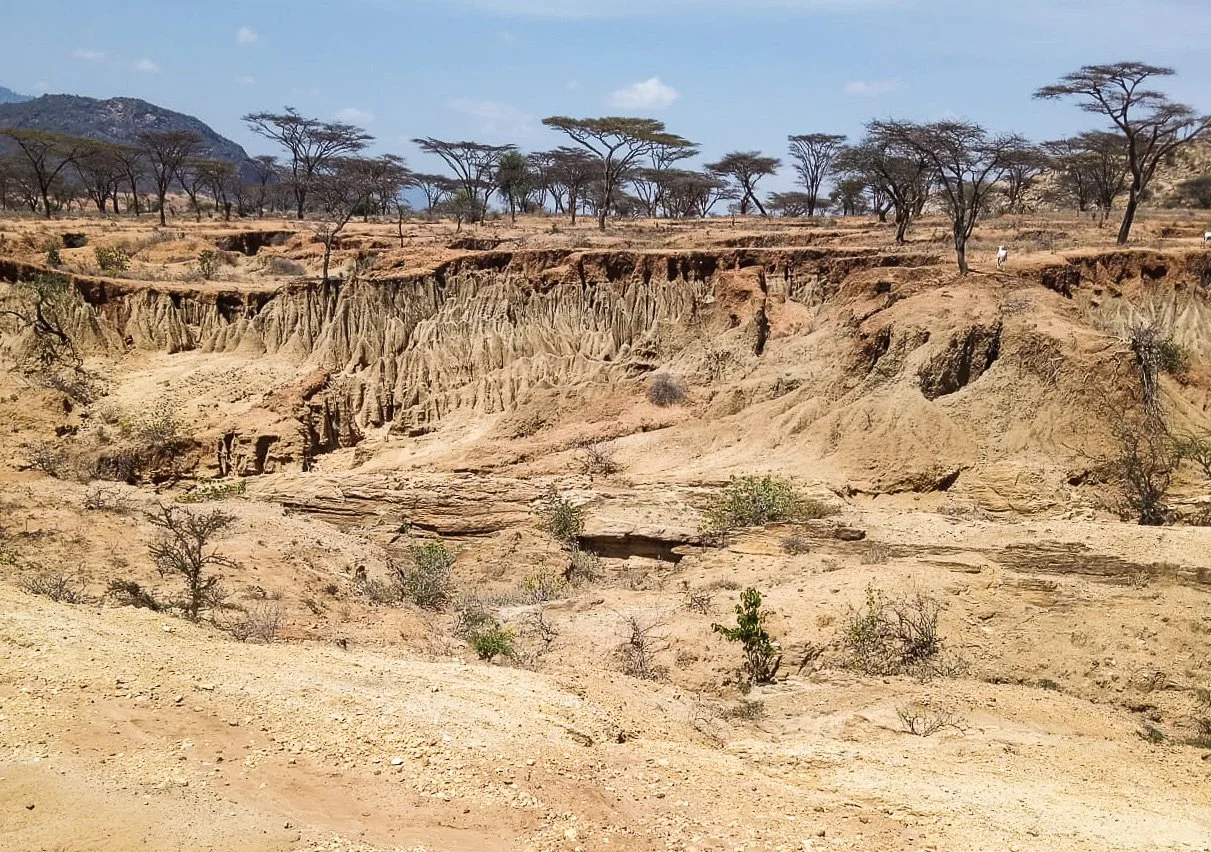
However, independence is not so easily acquirable. The Africa Fertiliser and Soil Health Summit Action Plan (AFSHAP) addressed multiple issues created by external interference, including the continued “area expansion” at the expense of forests, wetlands, grasslands, etc. Construction efforts, including China’s BRI—although providing short-term relief—had carried lasting environmental consequences for African countries, contributing to their low agricultural productivity. One such instance is how Kenya’s Standard Gauge Railway (SGR) caused expansive land degradation and severe biodiversity loss, being built on smallholder farmland, and mixed-use agricultural zones. Nearby areas also experienced land acquisitions resulting in them being converted into logistical zones. The land left untouched still experienced soil nutrient depletion and acidification, amongst other forms of environmental pollution—deepening Africa’s reliance on China through a reduced agricultural productivity.
And whilst there may once have been perceived benefit to these initiatives, they now set a dangerous precedent for Africa by normalising externally controlled food-security. In developing such initiatives, infrastructural projects such as the SGR have been replicated across the Sub-Sahara, exacerbating its agricultural inability, and keeping it reliant on continuous short-term relief. As such, Russia proposing that it create logistical corridors and regional hubs during the 2023 Russia-Africa summit may serve in intensifying Africa’s long-term dependence. This indicates that logistical corridors and hubs are not neutral. Not only do they shape how commodities move, and where they are stored, but—at least in Africa’s case—they have fostered a false sense of security that hindered self-sustainable development.
If the Russia-Africa logistical corridor is fully realised, fertiliser lifelines are susceptible to being leveraged as geo-political weapons. Supply could become conditional on Africa’s alignment with the BRICS bloc, used to consolidate Russia’s legitimacy throughout the Ukraine war. The Kremlin could further utilise Africa to frame the west as a uni-polar tyranny, vying for lifted sanctions, or even greater pursuit of multipolarity. Ultimately—whether probable or not—the very notion of dependence introduces the possibility for coercion, especially in the international arena.
As such, the AFSHAP details a 10-year plan that shifts away from area expansion, instead prioritising Integrated Soil Fertility Management (ISFM) and more affordable intra-continental fertiliser productions. This would result in healthier soil, reducing its acidity. The ISFM entails a system that balances minerals and organic inputs so that crops receive the right nutrients at the right rates, times, and places. Further initiatives intended to create more affordable, and readily accessible fertiliser include Nigeria’s Dangote Group, starting a 3-million-tonne per year urea plant in 2021, transforming Nigeria into a net exporter of nitrogen-based fertiliser, with similar ambitions being replicated across the continent. Interstate efforts have also included a south-south partnership to diversify Africa’s fragile supply source. Morocco’s OCP—the world’s leading phosphate producer—has constructed fertiliser and blending facilities across Africa, ultimately harmonising regional relations through trade that serve to consolidate Africa’s independence.
Sub-Saharan Africa importing 90% of its fertiliser cannot merely be the result of an economic shortfall. Like all arenas where conflict begets necessity, Africa’s fertiliser supply chains have become politicised spaces—sites where international players pursue influence through an indispensable commodity that bolsters Africa’s food security. Amongst all this, the BRICS bloc have come to occupy an ever-dominant position.
As such, Russia sits amongst the world’s foremost fertiliser producers. Its decisive distribution—where fertiliser goes and where it is withheld from—serve in influencing political dynamics amidst persistent tensions between Russia and the West. To exemplify, during the Ukraine war Russia reoriented its fertiliser exports toward “friendly” states, primarily within the Global South. The result: BRICS aligned states accounted for 60% of Russia’s fertiliser exports, with shipments to Africa increasing by 50% over the last 3 years, reaching 1.9 million tonnes by the end of 2024. Most notably, Cameroon, Benin and Nigeria exhibited dependency rates ≥ 44% since the start of the Ukrainian war. Prior to these war-time concessions, fertiliser remained largely unaffordable to Sub-Saharan Africa, such that the average fertiliser application was 22kg/ha, 7 times lower than the world average. Through Russia, Africa found short-term relief from acute fertiliser scarcity, temporarily aiding its agricultural output.
In like fashion, China remains as one of the top exporters of agricultural resources to Africa, shipping it millions of tonnes annually via logistical corridors—ports and railways—built under the Belt and Road Initiative (BRI). In fact, it exports 1.2-1.5 million tonnes of fertiliser in African markets each year, with South Africa, Nigeria, Tanzania, and Ethiopia being amongst the largest recipients. In 2024 alone, China’s fertiliser exports to South Africa were valued at $96 million, while its combined nitrogen and phosphate shipments to East Africa surpassed 600,000 tonnes, further exhibiting the BRICS states control of decisive links in Africa’s fertiliser import chain.
This market concentration allowed the BRICS bloc to leverage fertiliser access through foreign policy, positioning them as a reliable food-security source during times of global economic volatility. After Western Sanctions endangered the global south, Putin capitalised: engaging in “fertiliser diplomacy” by announcing a 260,000-tonne initiative of fertiliser donations to African countries via the UN World Food Programme. This framed the West as a cause of “artificial famine risks” and Russia as a “responsible supplier”, deepening the legacy of soviet cooperation with Africa against an already present anti-colonial sentiment. This attitude was subsequently reciprocated through multi-lateral forums, as a number of African countries avoided condemning Russia in UN General Assemblies and African Union Statements.
Yet, Africa’s dependence has left it worse-for-wear. In 2024, the Africa Fertiliser and Soil Health Summit (AFSHS) noted that the continent was left susceptible to global market shocks. In particular, COVID-19 and the Ukraine-Russia war resulted in a 25% decline in fertiliser consumption from 2019-2022. Beyond this, China announced its fertiliser shipment ban in late 2023 until May of the following year, with the effects further exposing Africa’s fragility. Multiple countries were unable to mitigate the effects of malnutrition—evident as crop production levels remained at approximately 30% of global averages in 2024—alerting Africa that its global suppliers could not be relied on indefinitely.
However, independence is not so easily acquirable. The Africa Fertiliser and Soil Health Summit Action Plan (AFSHAP) addressed multiple issues created by external interference, including the continued “area expansion” at the expense of forests, wetlands, grasslands, etc. Construction efforts, including China’s BRI—although providing short-term relief—had carried lasting environmental consequences for African countries, contributing to their low agricultural productivity. One such instance is how Kenya’s Standard Gauge Railway (SGR) caused expansive land degradation and severe biodiversity loss, being built on smallholder farmland, and mixed-use agricultural zones. Nearby areas also experienced land acquisitions resulting in them being converted into logistical zones. The land left untouched still experienced soil nutrient depletion and acidification, amongst other forms of environmental pollution—deepening Africa’s reliance on China through a reduced agricultural productivity.
And whilst there may once have been perceived benefit to these initiatives, they now set a dangerous precedent for Africa by normalising externally controlled food-security. In developing such initiatives, infrastructural projects such as the SGR have been replicated across the Sub-Sahara, exacerbating its agricultural inability, and keeping it reliant on continuous short-term relief. As such, Russia proposing that it create logistical corridors and regional hubs during the 2023 Russia-Africa summit may serve in intensifying Africa’s long-term dependence. This indicates that logistical corridors and hubs are not neutral. Not only do they shape how commodities move, and where they are stored, but—at least in Africa’s case—they have fostered a false sense of security that hindered self-sustainable development.
If the Russia-Africa logistical corridor is fully realised, fertiliser lifelines are susceptible to being leveraged as geo-political weapons. Supply could become conditional on Africa’s alignment with the BRICS bloc, used to consolidate Russia’s legitimacy throughout the Ukraine war. The Kremlin could further utilise Africa to frame the west as a uni-polar tyranny, vying for lifted sanctions, or even greater pursuit of multipolarity. Ultimately—whether probable or not—the very notion of dependence introduces the possibility for coercion, especially in the international arena.
As such, the AFSHAP details a 10-year plan that shifts away from area expansion, instead prioritising Integrated Soil Fertility Management (ISFM) and more affordable intra-continental fertiliser productions. This would result in healthier soil, reducing its acidity. The ISFM entails a system that balances minerals and organic inputs so that crops receive the right nutrients at the right rates, times, and places. Further initiatives intended to create more affordable, and readily accessible fertiliser include Nigeria’s Dangote Group, starting a 3-million-tonne per year urea plant in 2021, transforming Nigeria into a net exporter of nitrogen-based fertiliser, with similar ambitions being replicated across the continent. Interstate efforts have also included a south-south partnership to diversify Africa’s fragile supply source. Morocco’s OCP—the world’s leading phosphate producer—has constructed fertiliser and blending facilities across Africa, ultimately harmonising regional relations through trade that serve to consolidate Africa’s independence.
Sub-Saharan Africa importing 90% of its fertiliser cannot merely be the result of an economic shortfall. Like all arenas where conflict begets necessity, Africa’s fertiliser supply chains have become politicised spaces—sites where international players pursue influence through an indispensable commodity that bolsters Africa’s food security. Amongst all this, the BRICS bloc have come to occupy an ever-dominant position.
As such, Russia sits amongst the world’s foremost fertiliser producers. Its decisive distribution—where fertiliser goes and where it is withheld from—serve in influencing political dynamics amidst persistent tensions between Russia and the West. To exemplify, during the Ukraine war Russia reoriented its fertiliser exports toward “friendly” states, primarily within the Global South. The result: BRICS aligned states accounted for 60% of Russia’s fertiliser exports, with shipments to Africa increasing by 50% over the last 3 years, reaching 1.9 million tonnes by the end of 2024. Most notably, Cameroon, Benin and Nigeria exhibited dependency rates ≥ 44% since the start of the Ukrainian war. Prior to these war-time concessions, fertiliser remained largely unaffordable to Sub-Saharan Africa, such that the average fertiliser application was 22kg/ha, 7 times lower than the world average. Through Russia, Africa found short-term relief from acute fertiliser scarcity, temporarily aiding its agricultural output.
In like fashion, China remains as one of the top exporters of agricultural resources to Africa, shipping it millions of tonnes annually via logistical corridors—ports and railways—built under the Belt and Road Initiative (BRI). In fact, it exports 1.2-1.5 million tonnes of fertiliser in African markets each year, with South Africa, Nigeria, Tanzania, and Ethiopia being amongst the largest recipients. In 2024 alone, China’s fertiliser exports to South Africa were valued at $96 million, while its combined nitrogen and phosphate shipments to East Africa surpassed 600,000 tonnes, further exhibiting the BRICS states control of decisive links in Africa’s fertiliser import chain.
This market concentration allowed the BRICS bloc to leverage fertiliser access through foreign policy, positioning them as a reliable food-security source during times of global economic volatility. After Western Sanctions endangered the global south, Putin capitalised: engaging in “fertiliser diplomacy” by announcing a 260,000-tonne initiative of fertiliser donations to African countries via the UN World Food Programme. This framed the West as a cause of “artificial famine risks” and Russia as a “responsible supplier”, deepening the legacy of soviet cooperation with Africa against an already present anti-colonial sentiment. This attitude was subsequently reciprocated through multi-lateral forums, as a number of African countries avoided condemning Russia in UN General Assemblies and African Union Statements.
Yet, Africa’s dependence has left it worse-for-wear. In 2024, the Africa Fertiliser and Soil Health Summit (AFSHS) noted that the continent was left susceptible to global market shocks. In particular, COVID-19 and the Ukraine-Russia war resulted in a 25% decline in fertiliser consumption from 2019-2022. Beyond this, China announced its fertiliser shipment ban in late 2023 until May of the following year, with the effects further exposing Africa’s fragility. Multiple countries were unable to mitigate the effects of malnutrition—evident as crop production levels remained at approximately 30% of global averages in 2024—alerting Africa that its global suppliers could not be relied on indefinitely.
However, independence is not so easily acquirable. The Africa Fertiliser and Soil Health Summit Action Plan (AFSHAP) addressed multiple issues created by external interference, including the continued “area expansion” at the expense of forests, wetlands, grasslands, etc. Construction efforts, including China’s BRI—although providing short-term relief—had carried lasting environmental consequences for African countries, contributing to their low agricultural productivity. One such instance is how Kenya’s Standard Gauge Railway (SGR) caused expansive land degradation and severe biodiversity loss, being built on smallholder farmland, and mixed-use agricultural zones. Nearby areas also experienced land acquisitions resulting in them being converted into logistical zones. The land left untouched still experienced soil nutrient depletion and acidification, amongst other forms of environmental pollution—deepening Africa’s reliance on China through a reduced agricultural productivity.
And whilst there may once have been perceived benefit to these initiatives, they now set a dangerous precedent for Africa by normalising externally controlled food-security. In developing such initiatives, infrastructural projects such as the SGR have been replicated across the Sub-Sahara, exacerbating its agricultural inability, and keeping it reliant on continuous short-term relief. As such, Russia proposing that it create logistical corridors and regional hubs during the 2023 Russia-Africa summit may serve in intensifying Africa’s long-term dependence. This indicates that logistical corridors and hubs are not neutral. Not only do they shape how commodities move, and where they are stored, but—at least in Africa’s case—they have fostered a false sense of security that hindered self-sustainable development.
If the Russia-Africa logistical corridor is fully realised, fertiliser lifelines are susceptible to being leveraged as geo-political weapons. Supply could become conditional on Africa’s alignment with the BRICS bloc, used to consolidate Russia’s legitimacy throughout the Ukraine war. The Kremlin could further utilise Africa to frame the west as a uni-polar tyranny, vying for lifted sanctions, or even greater pursuit of multipolarity. Ultimately—whether probable or not—the very notion of dependence introduces the possibility for coercion, especially in the international arena.
As such, the AFSHAP details a 10-year plan that shifts away from area expansion, instead prioritising Integrated Soil Fertility Management (ISFM) and more affordable intra-continental fertiliser productions. This would result in healthier soil, reducing its acidity. The ISFM entails a system that balances minerals and organic inputs so that crops receive the right nutrients at the right rates, times, and places. Further initiatives intended to create more affordable, and readily accessible fertiliser include Nigeria’s Dangote Group, starting a 3-million-tonne per year urea plant in 2021, transforming Nigeria into a net exporter of nitrogen-based fertiliser, with similar ambitions being replicated across the continent. Interstate efforts have also included a south-south partnership to diversify Africa’s fragile supply source. Morocco’s OCP—the world’s leading phosphate producer—has constructed fertiliser and blending facilities across Africa, ultimately harmonising regional relations through trade that serve to consolidate Africa’s independence.